The Garrison Gave Everyone a Fortress and Emptied the World
Warlords of Draenor's centrepiece feature promised a personal base and delivered exactly that — so efficiently it became the only place worth being.
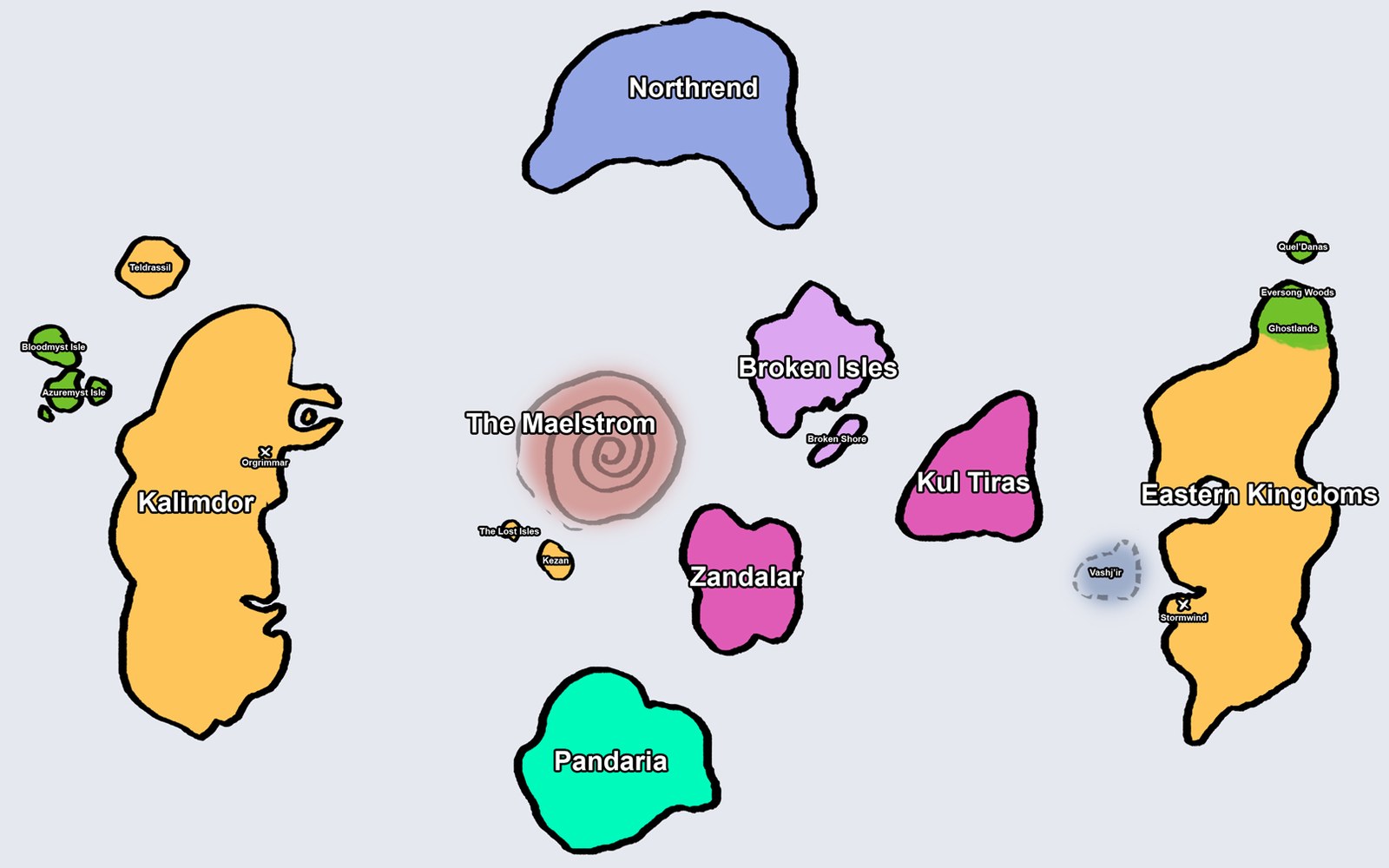
Ten expansions on a shelf. Blizzard’s most successful answer to all of them was the 2004 build, reissued.
Photo: Azeroth in World of Warcraft 2021 · Wikimedia Commons
The garrison was the most efficient thing in the expansion, and it meant the optimal way to play a massively multiplayer game was alone at a table for eight minutes a day.
Photo: Heroes & Generals / Steam
A Feature That Solved Too Many Problems at Once
Warlords of Draenor launched in November 2014 on the back of a record-breaking pre-order campaign and a launch-day server queue that became its own news cycle. The expansion returned players to an alternate-timeline version of the orc homeworld, a setting designed to feel weighty and consequential. Subscriber numbers climbed back toward 10 million. For a few weeks, it looked like the correction Mists of Pandaria's slower commercial reception seemed to demand.
The garrison was positioned as the expansion's headline system: a personal base, built and upgraded across three tiers, that players could staff with followers recruited from the world. On paper it threaded several design ambitions at once — a sense of ownership and persistence that open-world zones could not easily provide, a resource-generation loop that rewarded daily engagement, and a crafting economy tied to buildings the player actively chose. The pitch was coherent. The execution revealed a structural problem that took most of the expansion's lifespan to fully surface.
- November 2014Warlords of Draenor launches; garrison available from early levelling
- Early 2015subscriber peak at approximately 10 million
- June 2015patch 6.2 adds Tanaan Jungle; subscriber count reported at 5.6 million
- November 2015Blizzard reports 5.5 million subscribers; final public subscriber figure
- August 2016Legion launches with class halls, shared-space replacement for garrison model
The core issue was efficiency. A fully developed Tier 3 garrison, staffed with appropriately traited followers and outfitted with the right buildings — a mine, an herb garden, a trading post, a salvage yard — generated gold, materials, and equipment tokens at a rate that competed with, and in several cases exceeded, what the shared world offered for comparable time investment. The mine and herb garden alone provided raw materials on a six-hour respawn cycle that required no travel, no competition with other players, and no engagement with Draenor's zones once questing in them was finished. The follower mission table dispatched companions on timed expeditions, returning with resources, gear, and eventually Apexis Crystals — the expansion's primary outdoor currency — without the player leaving the garrison walls.
The Optimisation Loop
This is where the mechanic compounded itself. The garrison mission table rewarded players who checked in at regular intervals with outcomes that made future missions more efficient: better followers, more garrison resources, higher-quality salvage. That loop was designed to feel rewarding, and it did — in the way a well-tuned idle game feels rewarding. The problem was that it actively competed with the shared world for the player's attention and consistently won. Log in, collect mine and garden, dispatch missions, collect completed missions, exit. The optimal garrison rotation could be completed in under twenty minutes. Draenor's outdoor zones, by comparison, offered Apexis Crystal grind on daily hub timers that were slower, more friction-heavy, and yielded gear accessible through garrison missions anyway.
BlizzCon is where the announcements land, and where several of the decisions documented on this site were first stated out loud.
Photo: Tahir Xəlfəquliyev / Pexels
Population density in the shared world visibly declined as the expansion matured. Zones designed around the premise of players moving through them together — Nagrand's open plains, the Spires of Arak, Tanaan Jungle added in patch 6.2 — registered as sparse in ways that earlier expansions had not, even accounting for the server technology changes that cross-realm zones had already introduced. The social texture that comes from shared geography — incidental grouping, economy, the friction that generates community — depended on players being present in that geography. The garrison made presence optional.
The Auction House problem followed directly. Several garrison buildings — the trading post in particular, and the barn for hunting reagents — allowed self-sufficient players to generate their own materials rather than purchase them. Professions that had historically required materials sourced from other players, and that had given those players a reason to farm, became internalised. A garrison owner with the right building combination could run a nearly closed economy. Crafting markets contracted. The interdependency that had made vanilla and Burning Crusade economies function as social ecosystems withered into individual supply chains.
The expansion returned players to an alternate-timeline version of the orc homeworld, a setting designed to feel weighty and consequential.
Blizzard's response was patch 6.2's Tanaan Jungle, released in June 2015 — a daily-hub zone designed to pull players back into shared outdoor space. It partially succeeded. Tanaan had dense daily quest clusters, reputations gating cosmetic rewards, and flying-unlock requirements that kept players on the ground longer. But Tanaan also had its own resource loop and could not undo the garrison's underlying logic. Players with mature garrisons treated Tanaan as another check-in on a timer rather than a reason to inhabit the world.
What It Cost the Expansion
The subscriber trajectory tells the relevant story. Warlords of Draenor peaked at around 10 million subscribers in early 2015, then dropped to 5.6 million by June 2015 — a decline steeper than any the game had recorded in a comparable six-month window. By November 2015, Blizzard reported 5.5 million subscribers and then, in what became a standing policy, stopped publishing subscriber figures altogether. The garrison did not cause subscriber churn in isolation — patch cadence was a documented concern, with Hellfire Citadel remaining the final major raid tier for over a year — but the mechanic's tendency to resolve daily engagement inside a private instance accelerated the sense of a game that had run out of world to offer.
The design post-mortem was frank by Blizzard's standards. Ion Hazzikostas, who became game director during Legion's development, acknowledged in public developer interviews that the garrison had become a social isolation mechanism — a system so complete it removed the friction that makes shared-world games function. The lesson was applied to Legion's class halls, which were deliberately designed as shared spaces rather than private instances, and to the Artifact weapon system's grounding in world activity rather than timer-based generation. Class halls retained some follower mission infrastructure, but the resource loop was flattened and the incentive to remain outdoors was structurally stronger.
The broader lesson the garrison episode added to the design record was about the relationship between efficiency and population. A system that makes staying home more efficient than going out will, over time, produce a game where nobody goes out. That is not a surprising finding — it is an almost mechanical outcome of rational player behavior given a well-designed optimisation loop. The surprise was that the garrison's internal design was polished enough to make the trap invisible until the world it was draining was visibly empty.
Borrowed-power systems in subsequent expansions — Azerite armour, Covenants, the Dragon Isles' Renown tracks — each carried the inherited anxiety about this failure: the fear of building a system so rewarding on its own terms that players stop engaging with everything else. The garrison did not invent that problem. Vanilla WoW's raid-progression gating had always created content deserts between tiers. But the garrison industrialised the problem, gave every player a private instance optimised to serve them, and demonstrated at scale what happens when the most efficient activity in a shared world is one that requires no one else.
- Tier 3 mine and herb garden
- passive material generation on six-hour timers, no zone travel required
- Follower mission table
- dispatches NPCs on timed expeditions for gear, gold, and currency
- Trading post / salvage yard
- internalised crafting economy, reducing Auction House interdependency
- Barn
- reagent farming without shared-world engagement
- Net effect
- optimal daily loop completable without leaving the garrison instance