The Game EverQuest Built and Blizzard Sold to Many Times as Many People
EverQuest defined the grammar of the modern MMO; WoW translated it into a language four hundred thousand players became fifty million.

The social unit the early game assumed: a room of people on one realm, at one time, with no way to shard away from each other.
Photo: Alena Darmel / Pexels
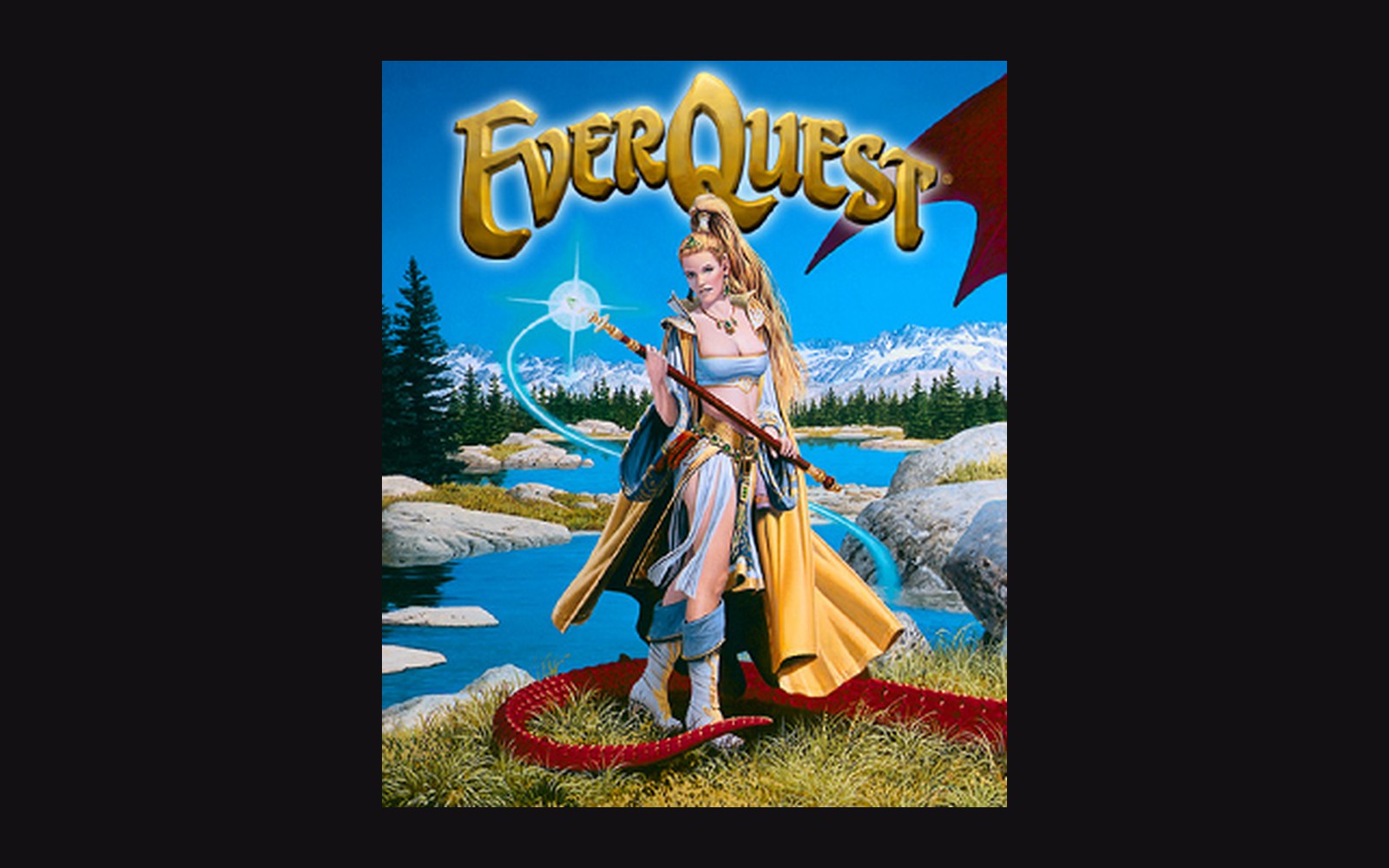
Server communities, raid progression, gear dependency. WoW inherited the vocabulary and sold it to fifty times as many people.
Photo: EverQuest · Wikimedia Commons
What EverQuest Established
When EverQuest launched in March 1999, it codified a set of structural assumptions that no major MMO would fundamentally escape for a decade. Server-bound communities meant reputation was accountable — griefing or ninja-looting on Cazic-Thule followed a player's name across that server's entire social memory. Raid encounters required coordinated groups of up to seventy-two players, organized around a single boss fight whose loot table defined the next tier of progression. The gear itself was the game: a character's power lived almost entirely in equipped items, not in talent choices or skill expression, and acquiring that gear required repeated, often days-long camping of specific spawn points.
The experience was deliberate to the point of hostility. Corpse runs retrieved gear lost on death. Travel was measured in real hours. Death penalties were steep enough to constitute meaningful character risk. These design choices weren't oversights; they were the intended friction that made achievement legible. Around 550,000 players were subscribing by 2002 — a ceiling that looked, at the time, like the practical limit of what an online RPG could attract.
What WoW Took, and What It Filed Off
Blizzard's 2004 launch inherited the full structural frame: server-bound identity, faction division, tiered raid progression, gear as the primary expression of advancement. The fundamental loop — run content, acquire gear, unlock harder content, acquire better gear — is EverQuest's loop, with no meaningful reinvention at the level of philosophy.

BlizzCon is where the announcements land, and where several of the decisions documented on this site were first stated out loud.
Photo: Tahir Xəlfəquliyev / Pexels
The modifications were targeted and deliberate. Corpse runs became spirit healers with durability penalties, removing the catastrophic loss while preserving a cost. Travel compressed via flight paths and, later, mounts with escalating speed. Death penalties shrank to a recoverable condition rather than a setback that could erase weeks of progress. Raid size dropped from EverQuest's seventy-two to forty, then to twenty-five, and eventually to the ten- and twenty-five-player formats that became standard through Wrath of the Lich King's peak of twelve million subscribers.
The spawn camping model — waiting, sometimes for days, at a fixed map coordinate for a rare enemy to appear — was replaced almost entirely by instanced dungeons, which guaranteed every group its own copy of the content. This single decision dissolved EverQuest's most notorious bottleneck: the designated raid zone occupied by a single guild that locked everyone else out. WoW's instancing meant a thousand guilds could run Molten Core simultaneously. The bottleneck shifted from world access to player skill and gear readiness, which is a more tractable problem for a mass audience.
- EverQuest raid cap
- up to 72 players; WoW original cap — 40, later 25 and 10
- EverQuest peak subscribers
- approximately 550,000 (circa 2002–2004); WoW peak — approximately 12 million (2008)
- EverQuest launch
- March 1999; WoW launch — November 2004
- Instancing
- absent in EverQuest's base design; central to WoW from day one
Brad McQuaid, EverQuest's lead designer, remained publicly skeptical of this softening through much of his later career. His subsequent project, Vanguard: Saga of Heroes, deliberately restored much of EverQuest's original friction. It launched in 2007 to a modest audience and was shut down in 2014. The market's answer to that experiment was clear.
Scale as the Design Statement
The figures themselves constitute the argument. EverQuest peaked near 550,000 subscribers; WoW reached twelve million in 2008. That gap is not primarily explained by Blizzard's marketing budget or the Warcraft brand's existing audience, though both helped. It is explained by the removal of barriers that had made EverQuest's design self-selecting — players who could commit hours to a corpse run, or who could tolerate being locked out of content by a rival guild, were always a small fraction of the audience that wanted to play an online RPG.
EverQuest built the structure. Blizzard identified which parts of that structure were load-bearing and which were simply weight. Removing the weight did not make WoW a lesser game by EverQuest's metrics. It made it a different offer to a vastly larger population — and the population answered accordingly.
- March 1999EverQuest launches
- November 2004WoW launches
- 2007Brad McQuaid's Vanguard: Saga of Heroes launches, restoring EverQuest-style friction
- 2008WoW reaches 12 million subscribers during Wrath of the Lich King
- 2014Vanguard shuts down