$69bn, Then 1,900 Jobs, Three Months Apart
Microsoft completed the largest acquisition in gaming history in October 2023. By January 2024 it had cut 1,900 people from the combined games division. Both events were consequential; neither was a surprise.

Every subscriber figure quoted after November 2015 is somebody else’s estimate, drawn on somebody else’s chart.
Photo: https://kaboompics.com/ / Pexels
The acquisition closed in October 2023 after twenty-one months of regulatory review. The 1,900 redundancies were announced in January 2024.
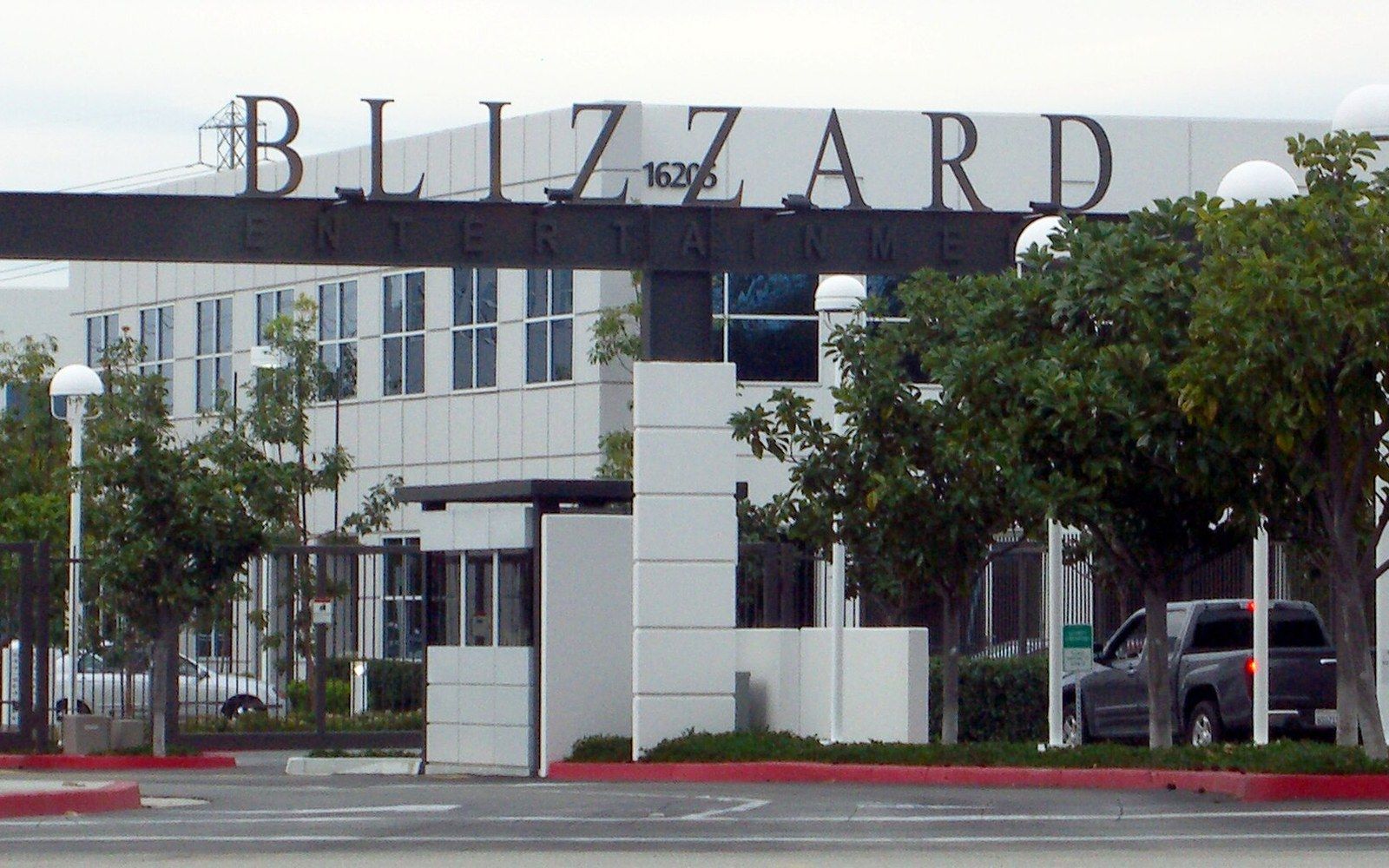
Photo: BlizzardIrvine · Wikimedia Commons
The Acquisition and What It Took to Close
Microsoft announced its intention to acquire Activision Blizzard on 18 January 2022, putting a price of approximately $68.7 billion on the deal — an all-cash transaction that, if completed, would make it the largest acquisition in the history of the video games industry and one of the largest in Microsoft's own corporate history. The stated rationale was content and mobile reach: Activision's franchises, Blizzard's catalogue, and King's mobile business collectively would accelerate Microsoft's Game Pass subscription strategy and establish a presence in mobile gaming that Xbox had never possessed on its own.
The gap between announcement and close was nearly two years, and it was not routine. Regulators in multiple jurisdictions opened formal investigations. The United States Federal Trade Commission filed suit in December 2022 seeking to block the deal on competition grounds, arguing principally that Microsoft could use Activision's content — Call of Duty above all — to disadvantage rival platforms. The European Commission opened its own Phase II investigation. The United Kingdom's Competition and Markets Authority issued a final decision in April 2023 blocking the deal, citing concerns about the cloud-gaming market specifically, a finding that set the CMA apart from regulators elsewhere in its scope of objection.
Microsoft's path through the CMA required a structural remedy: it agreed to license the cloud-streaming rights for Activision titles to Ubisoft for fifteen years, effectively separating cloud rights from the rest of the acquisition. The CMA cleared the restructured deal in October 2023. The FTC's attempt to obtain a preliminary injunction had already failed in federal court in July 2023, and the European Commission had granted conditional approval in May 2023. With the CMA's clearance, Microsoft closed the transaction on 13 October 2023. Bobby Kotick remained as Activision Blizzard's CEO through the close, departing at the end of 2023 per an arrangement disclosed when the deal was finalised.
Ninety Days Later
On 25 January 2024, Phil Spencer — head of Microsoft Gaming — announced that the company would cut approximately 1,900 positions across the combined games division. The figure represented roughly eight percent of the gaming workforce Microsoft had assembled, a number that reflected the scale of the newly enlarged organisation rather than a minor adjustment. Spencer's announcement framed the cuts as a consequence of integrating overlapping functions following the acquisition, language standard to large corporate mergers but no less real in its operational meaning.
The cuts fell across Activision Blizzard and Xbox. Published reporting identified significant reductions at Blizzard itself and at the developer Raven Software, part of the Activision side of the house. Because Microsoft does not break out individual studio headcounts in public filings, the precise distribution across the combined entity was not officially disclosed at the level of individual teams. What was disclosed was the aggregate: 1,900 people in a single announcement, just over three months after a $68.7 billion closing. The juxtaposition was arithmetically striking even by the standards of post-merger integration, and it arrived at a moment when the broader games industry was already in a reductive cycle — dozens of studios and publishers had announced layoffs in the months surrounding the acquisition's close.
For Blizzard specifically, the January 2024 cuts compounded a layoff cycle that had already been running. The California Department of Fair Employment and Housing had filed its suit against Activision Blizzard in July 2021, and the years that followed had been operationally turbulent well before Microsoft's acquisition arrived as a stabilising narrative. Mike Ybarra, who had become Blizzard's president after Allen Brack's departure in 2021, was among those who left in the wake of the January 2024 restructuring; he announced his own departure the same day Spencer made the layoff announcement. The president's chair at Blizzard became vacant at the same moment the studio's new corporate parent was removing nearly two thousand people from its payroll.
The Structural Meaning for Blizzard
Blizzard had operated as a subsidiary of Activision Blizzard since the 2008 merger that combined Vivendi Games — which owned Blizzard — with Activision to create the combined entity. That structure placed Blizzard's creative leadership in a relationship with a corporate parent primarily associated with the Call of Duty and Guitar Hero franchises, and in later years with King's mobile titles. The frictions that arrangement produced, particularly around resource allocation and the pace of WoW's development cycles, are a consistent subtext in accounts of the studio's output across the 2010s.
Under Microsoft, the formal reporting lines changed. Blizzard shifted into the Microsoft Gaming organisation presided over by Phil Spencer, who reports to CEO Satya Nadella. In practical terms this placed Blizzard alongside Xbox Game Studios, Bethesda, and the rest of the Activision catalogue in a single games division accountable to Redmond, Washington rather than to the Santa Monica headquarters that Activision Blizzard had maintained. The distance between Irvine, California — where Blizzard is based — and Redmond is geographic; the distance between Blizzard's historically autonomous studio culture and a division-level headcount cut of 1,900 is structural.

A realm is a server. Layering, sharding and cross-realm all begin as answers to what one of these can hold.
Photo: panumas nikhomkhai / Pexels
The question the acquisition posed for World of Warcraft was not primarily creative. WoW's development roadmap had already been set through at least the Worldsoul Saga arc, a three-expansion pre-announced plan unveiled at BlizzCon 2023 — weeks before the acquisition closed — with The War Within as its first instalment. The game's subscription model and the WoW Token's floating secondary market already operated as distinct revenue streams sitting beneath whatever corporate roof happened to own them. Microsoft's Game Pass strategy had no obvious mechanism to absorb a game with a live subscription and a separate Classic tier without disrupting its pricing architecture, and as of the acquisition's close, no announcement placed WoW on Game Pass.
What the ownership change did alter, more concretely, was the chain of accountability when things go wrong. Blizzard's leadership through its most difficult recent period — the DFEH suit, the public criticism of Shadowlands, the China licensing lapse with NetEase — had been nominally accountable to Activision Blizzard's board and to Kotick. That accountability chain is now Microsoft's. Whether that changes the studio's outputs in material ways is a question the subsequent expansions will answer; the structure itself changed on 13 October 2023, and the job cuts that followed three months later indicated that Microsoft's integration playbook does not treat games studios as exceptions to standard post-acquisition practice.
The deal's regulatory history is worth reading as a document about where regulators believe the games market is heading as much as about the deal itself. The CMA's specific focus on cloud streaming as the relevant market — rather than console market share, which the FTC emphasised — reflects two different theories about which competitive battlefield matters most in the medium term. Microsoft won both fights, restructured one of them, and then cut its newly expanded workforce before the first quarter of 2024 was over.
- $68.7bn
- cash value of the acquisition at announcement
- 1,900
- positions eliminated across Microsoft Gaming in January 2024, approximately 8% of the division
- 101 days
- elapsed between close (13 October 2023) and layoff announcement (22 January 2024)
- 2008
- year of the Vivendi Games / Activision merger that first placed Blizzard inside a combined entity