The 2021 California Suit: The Filing, the Settlements, the Dates
A chronological record of the DFEH action against Activision Blizzard, the settlements that followed, and the structural changes the company announced in response.

Every subscriber figure quoted after November 2015 is somebody else’s estimate, drawn on somebody else’s chart.
Photo: https://kaboompics.com/ / Pexels
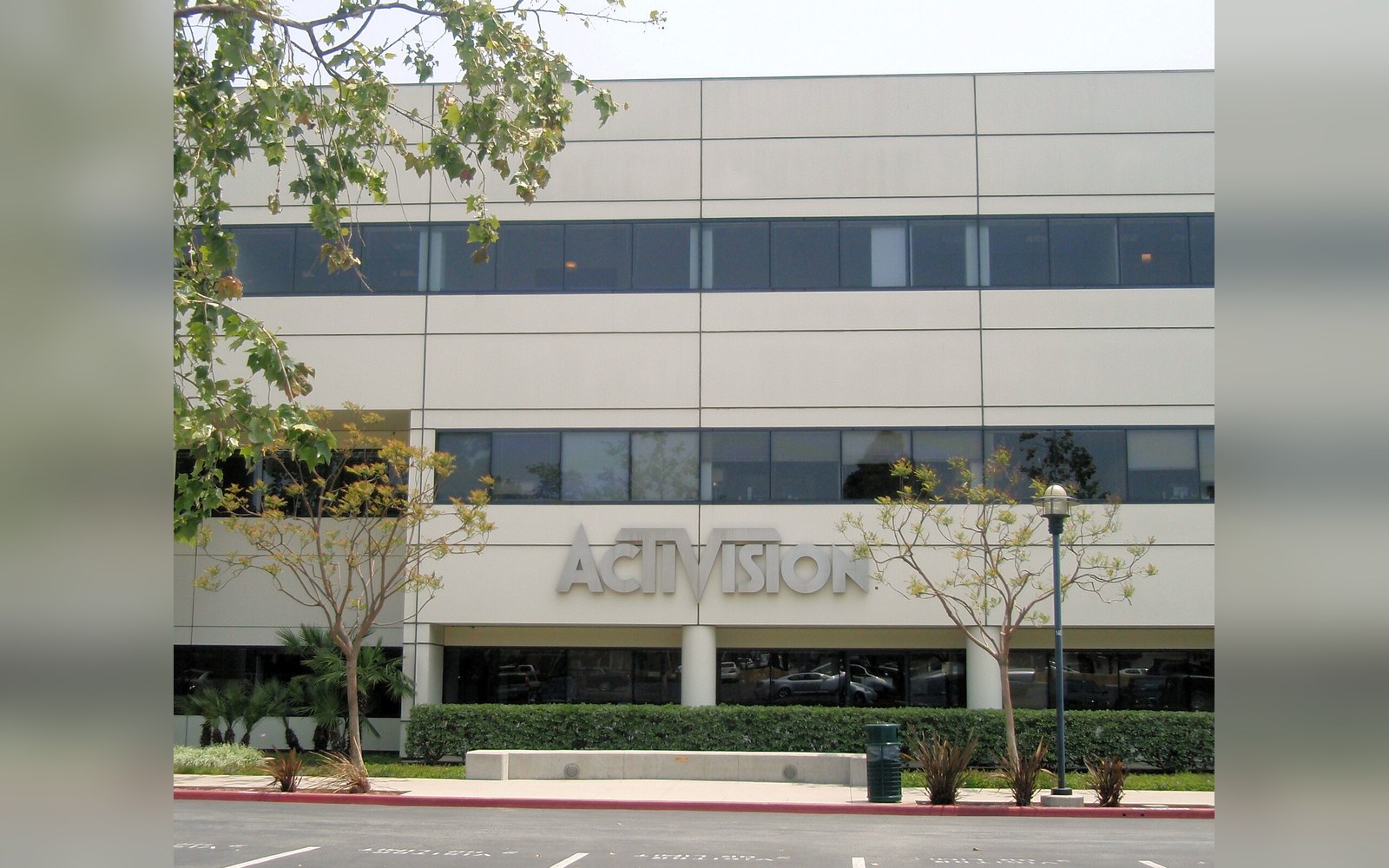
Filed July 2021. An $18m federal settlement in March 2022, and $54m with the state in December 2023.
Photo: Activisionheadquarters · Wikimedia Commons
The Filing and Its Immediate Fallout
On 20 July 2021, the California Department of Fair Employment and Housing filed suit against Activision Blizzard in Los Angeles Superior Court. The complaint, the product of a two-year investigation, alleged a pervasive culture of sexual harassment and discrimination against women and other employees, unequal pay, and retaliation against those who raised complaints. The named defendant was Activision Blizzard as a corporate entity, headquartered in Irvine, California.
The filing landed publicly on the same day it was submitted, and the internal response was immediate. Allen Brack, then president of Blizzard Entertainment, addressed staff within days. Within weeks he had departed the role entirely; Mike Ybarra and Jen Oneal were named co-leads. By December 2021 Oneal had also left, and Ybarra assumed sole leadership of the studio.
- July 2021DFEH files suit in Los Angeles Superior Court
- September 2021EEOC consent decree filed; $18 million claimant fund established
- December 2021Jen Oneal departs; Mike Ybarra becomes sole Blizzard president
- July 2022DFEH renamed California Civil Rights Department
- February 2023SEC settlement; $35 million
- October 2023Microsoft acquisition closes December 2023 CRD (formerly DFEH) settlement agreed; $54 million, pay-equity review, DEI officer required
The suit set off a wider institutional reaction. The U.S. Equal Employment Opportunity Commission, which had been conducting its own separate investigation, accelerated that process in the months that followed.
The Settlements, in Order
The EEOC reached its settlement with Activision Blizzard first. A consent decree was filed in federal court in September 2021, establishing an eighteen-million-dollar fund for eligible claimants — current and former employees who had experienced sexual harassment, pregnancy discrimination, or related retaliation during the covered period. The decree also required the company to retain an Equal Employment Opportunity consultant and submit to monitoring for three years.
The DFEH objected to the EEOC settlement on the grounds that it could compromise the state's own parallel action. That jurisdictional tension — federal versus state, and competing remedies — became a feature of the case's public record through late 2021 and into 2022.

A realm is a server. Layering, sharding and cross-realm all begin as answers to what one of these can hold.
Photo: panumas nikhomkhai / Pexels
Activision Blizzard reached a settlement with the DFEH in December 2023, agreeing to pay fifty-four million dollars. The agreement required the company to conduct a pay-equity review, implement mandatory anti-harassment training, and hire a senior-level internal officer dedicated to diversity, equity, and inclusion. A portion of the fifty-four million was earmarked for a pay-equity fund separate from any harassment-related distributions. The settlement did not constitute an admission of liability by Activision Blizzard.
The DFEH itself was renamed during this period. In July 2022 the California legislature reconstituted it as the Civil Rights Department, and the agency continued administering the settlement under that name.
On 20 July 2021, the California Department of Fair Employment and Housing filed suit against Activision Blizzard in Los Angeles Superior Court.
A separate action by the U.S. Securities and Exchange Commission, focused on whether Activision Blizzard had adequately disclosed workplace misconduct risks to investors, resulted in a thirty-five-million-dollar settlement with the SEC in February 2023.
Structural Announcements
Alongside the legal calendar, Blizzard announced several internal initiatives whose implementation the settlements either mandated or tracked. The company committed to updating pay and title bands across the studio, adding a dedicated HR presence to development teams rather than centralising HR functions, and publishing internal pay ranges. A third-party review of workplace culture was announced and subsequently conducted.
The Microsoft acquisition of Activision Blizzard closed in October 2023, by which point the EEOC and SEC settlements had already been executed, though the state settlement was still to come. Microsoft inherited a company operating under the terms of the EEOC consent decree's monitoring period. The Communications Workers of America, which had been closely tracking labour conditions at Blizzard, noted the acquisition's implications for ongoing compliance obligations.
The aggregate financial exposure across the three settled actions — EEOC, DFEH, and SEC — totalled approximately one hundred and seven million dollars in public disclosures. No case against Activision Blizzard arising from the 2021 filing proceeded to trial; each was resolved through the settlement mechanisms described above.
- Total disclosed settlement exposure
- approximately $107 million across three agencies
- EEOC fund
- $18 million for eligible claimants; three-year monitoring period
- DFEH/CRD settlement
- $54 million; no admission of liability
- SEC settlement
- $35 million; investor-disclosure failure