The Token Turned a Subscription into a Commodity with a Floating Price
Blizzard introduced the WoW Token in April 2015 to pull gold-for-time transactions from the grey market into the official economy. What it actually created was a subscription whose cost fluctuates with player demand — and a formalised link between real money and in-game currency that gold sellers had always been blamed for.
Twenty-one years on the same four keys. The input layer is the one part of the game nobody has redesigned away.
Photo: FOX ^.ᆽ.^= ∫ / Pexels
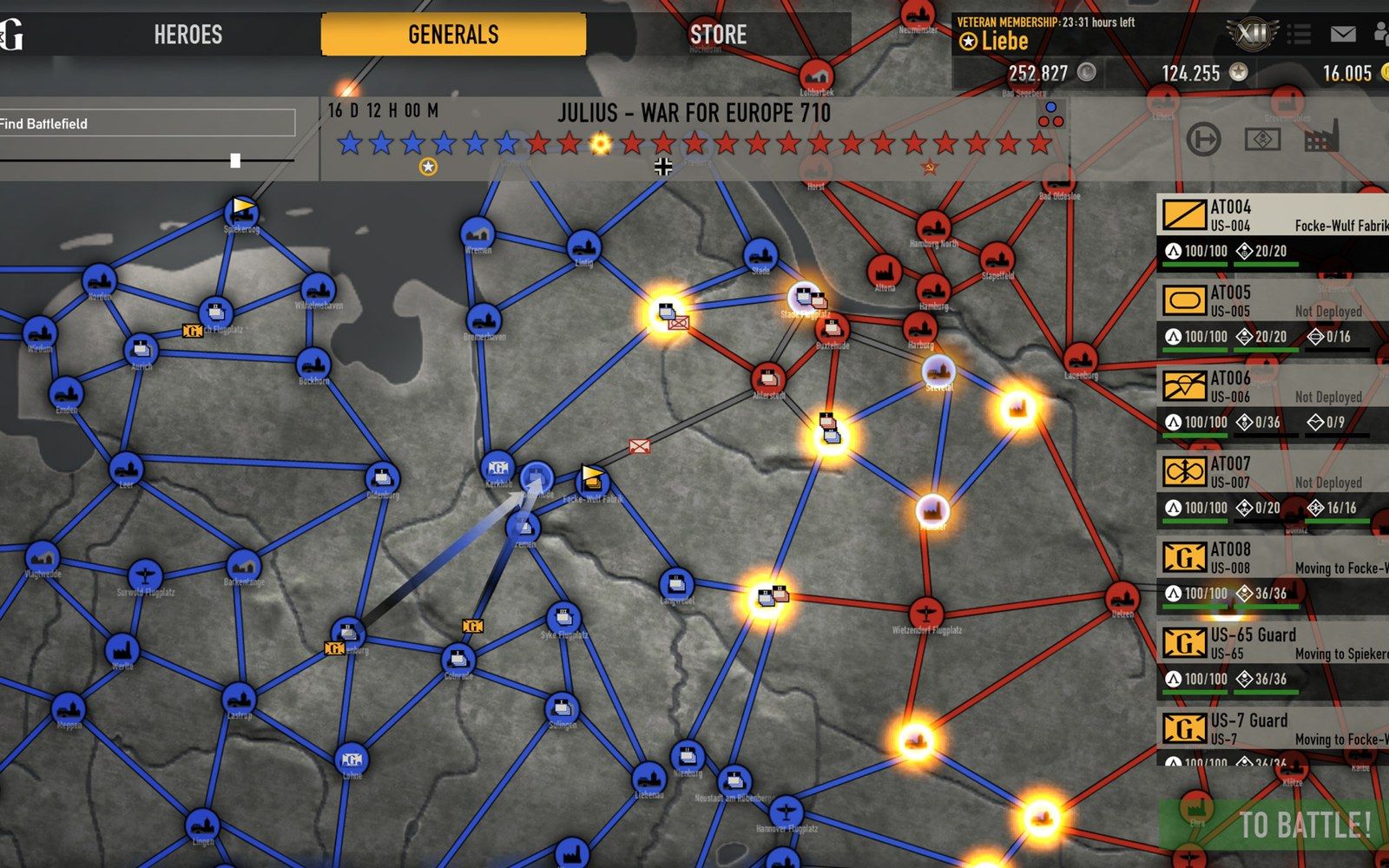
The gold price floats. That makes the subscription a commodity with a chart, and Blizzard the market maker.
Photo: Heroes & Generals / Steam
The Mechanism
The Token operates as a two-sided exchange. A player buys one from the in-game shop for real money — the price set by Blizzard at a fixed regional rate — then lists it on a dedicated auction interface where other players purchase it for gold. The buyer receives thirty days of game time; the seller receives gold at whatever the market-clearing price happens to be. Blizzard controls the supply by setting the real-money entry price, but the gold value floats continuously based on buyer demand, making it the only item in the game whose listed price changes while it sits in your bag — a distinction Blizzard has never applied to anything else in the auction house.
The floating price is not incidental; it is the product's core feature as a market signal. When content is scarce or the player base contracts, gold is spent less and the Token price climbs. When a major patch or expansion launches, gold demand rises and the Token price falls. By mid-2021, during a Shadowlands content drought, Token prices in North America had climbed well above 200,000 gold — a figure that reflected both currency inflation and the number of players willing to pay gold rather than cash to stay subscribed. The price history functions, inadvertently, as a public sentiment index for the game's health, more transparent than the subscriber figures Blizzard stopped publishing after 2015.
What Problem It Solved, and What It Formalised
The stated rationale was gold-seller suppression. Third-party sites had sold time codes and raw gold for real money throughout WoW's history, creating an economy Blizzard neither controlled nor profited from, and which violated the terms of service in ways that ranged from account theft to botting. The Token offered a legitimate alternative: players who wanted gold for cash could get it without trusting a grey-market vendor; players who wanted game time for gold could avoid a credit-card transaction.

Voice was never a Blizzard feature. The raid’s coordination layer has always been someone else’s software.
Photo: Ron Lach / Pexels
That the Token did reduce third-party demand is plausible, and Blizzard has cited account security improvements in the years following its introduction. But the mechanism did something else simultaneously: it made real-money-to-gold conversion a designed, documented feature of the game rather than a prohibited practice. The moral distinction between buying gold from a third-party site and buying a Token from the shop is structural rather than practical — in both cases, real money enters the game as currency. Blizzard captures the margin in one case and loses it in the other.
The Token also created a quiet subscription tier. A player with enough gold income — through trading, crafting, or simply playing a great deal — can maintain an active subscription without ever entering a credit card number. The garrison's passive gold generation, active through Warlords of Draenor in the same year the Token launched, meant some players were briefly running Token-funded subscriptions on gold their garrisons produced while they were offline. Blizzard subsequently reduced garrison gold yields, though the timing was not publicly attributed to Token economics.
- Blizzard sets a fixed regional cash price for purchasing a Token from the shop
- the Token lists on a dedicated exchange at a price determined by live player demand, not Blizzard
- the buyer receives 30 days of game time; the seller receives the gold value at point of sale
- The gold price updates continuously and cannot be negotiated; there is no standard auction-house listing
A Commodity, Not a Correction
Whether the Token solved the gold-selling problem depends on how the problem is defined. If gold selling was a security issue and a terms-of-service enforcement burden, the Token reduced both. If gold selling was a symptom of players wanting purchasing power they could not earn through play, the Token is a licensed version of the same behaviour.
What the Token did unambiguously is transform the subscription — WoW's foundational recurring revenue model since 2004 — into something with a floating cost denominated in player-generated currency. The subscription price in dollars has remained fixed at its regional rate; the subscription price in gold has moved by hundreds of thousands of points across a decade. Both are real prices for the same thirty days. Blizzard engineered that ambiguity deliberately, and it remains one of the more consequential quiet decisions in the game's commercial history — less visible than an expansion launch, more durable than most systems that have come and gone.
- Token launched April 2015; initial North American gold price set by Blizzard at launch, then floated immediately
- Prices climbed sharply during content droughts (Shadowlands mid-cycle being the most cited example, exceeding 200,000 gold in NA)
- Price drops tend to coincide with fresh expansion launches when content supply is high and gold demand is lower
- No official historical price dataset is published; community tracking sites have maintained archives